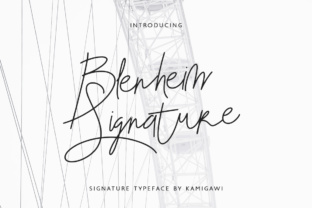
Blenheim Signature: A Classy and Minimalist Choice for Design Projects
Blenheim Signature is a distinctive font that blends elegance with simplicity, making it an ideal choice for designers seeking a personal touch in their work. Its clean lines and refined structure allow it to stand out while maintaining a sense of sophistication. Whether used as a title, logotype, or decorative element, Blenheim Signature offers versatility that can enhance a wide range of design projects.
This font is particularly well-suited for modern and minimalist designs, where clarity and visual impact are key. Its subtle details add character without overwhelming the composition, ensuring it remains legible and professional. At the same time, its stylistic elements provide a level of refinement that can elevate more traditional or luxury-oriented designs.
What Makes Blenheim Signature Unique?
Blenheim Signature distinguishes itself through its balance of form and function. Unlike many other signature fonts that lean heavily into ornate or dramatic styles, this typeface maintains a restrained aesthetic that feels both contemporary and timeless. Its minimalism allows it to integrate seamlessly into various design contexts, from branding to editorial layouts.
The font’s structure features slightly curved strokes and a soft, hand-drawn feel that gives it a personal, human quality. This makes it especially appealing for projects that aim to convey authenticity or individuality. However, it avoids the extremes of casual or overly stylized scripts, which keeps it appropriate for professional settings.
One of the key strengths of Blenheim Signature is its adaptability. It works well in both digital and print formats, and its legibility at different sizes ensures it remains effective across multiple applications. This flexibility makes it a practical choice for designers who need a reliable font that can perform in diverse environments.
Comparing Blenheim Signature to Similar Fonts
When evaluating Blenheim Signature against other signature fonts, it’s important to consider the specific needs of a project. Many similar fonts emphasize boldness or artistic flair, which can be advantageous in certain contexts but may not align with all design goals. Blenheim Signature occupies a middle ground, offering a polished yet approachable style that suits a broader range of uses.
For instance, fonts like Great Vibes or Playfair Display often carry a more pronounced historical or decorative influence. While these can add a strong visual identity, they may not be as versatile for everyday use. Blenheim Signature, by contrast, provides a more neutral foundation that can complement a variety of design elements without competing with them.
In comparison to more modern sans-serif or slab-serif fonts, Blenheim Signature brings a unique blend of personality and professionalism. It doesn’t sacrifice readability for style, which is a critical factor in many design scenarios. This makes it a suitable alternative for projects that require a touch of character without compromising on clarity.
When Blenheim Signature Is the Right Choice
Blenheim Signature is particularly effective in situations where a subtle yet distinctive visual identity is needed. It excels as a logotype or heading font, where its refined appearance can help establish a brand’s tone. For example, in a luxury fashion or lifestyle brand, Blenheim Signature can communicate a sense of exclusivity and craftsmanship without being overly complex.
It is also well-suited for personal or creative projects, such as wedding invitations, artist portfolios, or designer collections. In these cases, the font’s handcrafted feel adds a layer of individuality that resonates with audiences looking for something unique. Its ability to convey a personal touch makes it a valuable tool for creators who want to express their style through typography.
Additionally, Blenheim Signature can serve as a complementary font in multi-font designs. When paired with a more neutral body font, it can add visual interest to headings or subheadings without disrupting the overall harmony of the layout. This makes it a useful asset for designers working on comprehensive branding or editorial projects.
Situations Where Other Options May Be Better
While Blenheim Signature has many strengths, it may not be the best fit for every project. In cases where a bolder or more dynamic font is required, alternatives with greater visual weight or expressive characteristics might be more appropriate. For example, a high-energy marketing campaign could benefit from a font that commands attention more directly.
Similarly, if a project demands a highly structured or technical look, Blenheim Signature’s softer edges may not align with the desired aesthetic. In such instances, fonts with a more rigid or geometric form could offer a better match. The decision ultimately depends on the intended message and the visual language that best supports it.
Another consideration is the target audience. While Blenheim Signature appeals to those seeking a refined and personal style, it may not resonate as strongly with younger or more digitally-focused demographics. In these cases, a more contemporary or experimental font could be more effective in capturing attention and conveying relevance.
Practical Use Cases and Examples
One common application of Blenheim Signature is in logo design, where its balance of elegance and simplicity helps create a memorable and professional image. A boutique coffee shop, for example, might use it to craft a logo that reflects both sophistication and a personal connection to the brand.
Another scenario involves editorial design, such as magazine covers or book titles. Here, Blenheim Signature can add a touch of class and individuality, helping to differentiate the publication from others in the same category. Its legibility ensures it remains effective even when used in smaller sizes or alongside other text elements.
For personal branding, Blenheim Signature can be used in business cards, social media profiles, or portfolio websites. It provides a consistent visual identity that reinforces a professional yet approachable image. This makes it a popular choice among freelancers, artists, and entrepreneurs who want to present themselves in a polished manner.
Conclusion: Making an Informed Decision
Blenheim Signature offers a compelling option for designers looking to add a touch of class and personality to their work. Its minimalist yet distinctive style makes it adaptable to a wide range of projects, from luxury branding to creative personal endeavors. However, its suitability depends on the specific requirements of each design task.
By understanding the strengths and limitations of Blenheim Signature, designers can make informed choices about when and how to use it. Whether it’s the right font for a project will depend on factors such as the desired aesthetic, the target audience, and the overall design strategy. Exploring alternatives and considering practical examples can further support this decision-making process.
Ultimately, Blenheim Signature stands out as a versatile and elegant choice for those who value subtlety and refinement in their typographic selections. Its ability to blend into different design contexts while maintaining a clear identity makes it a valuable addition to any designer’s toolkit.