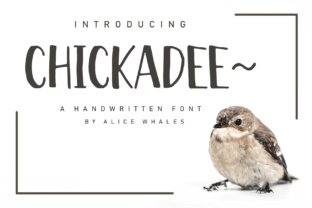
Chickadee: A Quirky, Legible Font for Creative Projects
The Chickadee typeface is a distinctive and approachable font that brings a sense of warmth and personality to any design. Its friendly, hand-drawn aesthetic makes it ideal for projects that aim to convey a playful or casual tone. Unlike more rigid or formal typefaces, Chickadee offers a unique visual identity that can help a design stand out while maintaining readability.
Designed with a focus on legibility, Chickadee balances its whimsical elements with clarity, making it suitable for both digital and print applications. Whether used in logos, packaging, or web content, this font adds a touch of charm without sacrificing functionality. Its versatility allows it to fit into a wide range of creative contexts, from children's books to brand identities that seek to communicate approachability.
What Makes Chickadee Distinct?
Chickadee stands out due to its combination of organic shapes and consistent spacing. The font’s letterforms have subtle variations that mimic handwritten style, giving it a personal and authentic feel. This quality makes it particularly effective for designs that aim to feel more human or relatable. Unlike some other doodle-style fonts that may sacrifice clarity for visual flair, Chickadee maintains a level of readability that works across different sizes and mediums.
Another key feature is its adaptability. While it has a clear personality, it doesn’t dominate the design space. Instead, it complements other elements without overwhelming them. This makes it a good choice for designers who want to add a unique touch without compromising the overall balance of their work.
Chickadee Compared to Similar Options
When considering fonts like Chickadee, it’s helpful to compare them with similar styles to understand where they excel and where they might fall short. Doodle-typefaces often share common traits, such as informal shapes and a handcrafted look, but each has its own nuances. For example, some fonts may lean more toward a rough, uneven appearance, while others offer a cleaner, more refined version of the same style.
Chickadee sits somewhere between these extremes. It avoids the chaotic energy of some doodle fonts and instead offers a more polished, yet still expressive, alternative. This makes it a good middle ground for projects that need a bit of personality but also require a professional appearance. In contrast, fonts with more irregular forms might be better suited for highly creative or experimental designs, but could be less practical for everyday use.
Compared to serif or sans-serif fonts, Chickadee provides a different kind of visual interest. Serifs often convey tradition and stability, while sans-serifs tend to feel modern and clean. Chickadee, however, introduces a sense of spontaneity and fun, which can be beneficial for brands or projects aiming to appear more accessible or energetic.
Strengths and Best-Fit Situations
One of Chickadee’s main strengths is its ability to convey a friendly and approachable mood. This makes it well-suited for branding in industries such as education, wellness, or family-oriented products. For instance, a children’s book publisher might find Chickadee useful for titles or promotional materials, as it reinforces a sense of playfulness and creativity.
It also works well in digital environments, especially when paired with simpler layouts. Because of its legibility, it can be used in headings, captions, or even body text, depending on the design. However, it’s important to consider how the font scales at different sizes. At smaller sizes, its details may become less distinct, so it’s best used in larger formats where its character can shine.
For designers looking to add a personal touch to their work, Chickadee offers an easy way to inject a sense of individuality without requiring extensive typographic expertise. Its availability in multiple weights and styles also gives users flexibility in how they apply it within a design system.
Tradeoffs and Limitations
While Chickadee has many appealing qualities, it may not be the best choice for every project. Its informal nature could be seen as inappropriate for more serious or traditional contexts. For example, a financial institution or legal firm might prefer a more neutral or structured font to reinforce professionalism and trustworthiness.
Additionally, because of its unique shape, Chickadee may not pair well with all other typefaces. Designers should test it alongside other fonts to ensure that the combination feels cohesive and balanced. Some fonts might clash with its organic forms, leading to a visually jarring result.
Another consideration is the font’s availability. While Chickadee is accessible through various platforms, it may not be as widely supported as more standard typefaces. This could affect how it displays across different devices or software, especially if it’s not embedded properly in a document or website.
When Chickadee Is the Right Choice
Chickadee is an excellent option when the goal is to create a design that feels warm, engaging, and slightly unconventional. It’s particularly effective in projects that target younger audiences or aim to communicate a sense of fun and creativity. For example, a local coffee shop looking to build a cozy, community-focused image might use Chickadee in its signage or social media graphics to reinforce that vibe.
It also works well in campaigns that emphasize storytelling or emotional connection. The font’s personality can help draw attention and make a message more memorable. When paired with soft colors or illustrative elements, it can enhance the overall narrative of a design.
When to Consider Alternatives
If the design requires a more formal or neutral tone, alternatives to Chickadee may be more appropriate. Fonts like Helvetica, Georgia, or Roboto offer a clean, reliable look that works across a wide range of applications. These options are often preferred in corporate or editorial settings where consistency and professionalism are priorities.
For projects that need a stronger visual impact, other doodle-style fonts might provide more dramatic results. Fonts with bolder strokes or more exaggerated shapes can be more eye-catching, though they may require careful handling to avoid appearing cluttered or unprofessional.
Ultimately, the decision to use Chickadee depends on the specific goals of the project and the audience being targeted. By understanding its strengths and limitations, designers can make informed choices about whether it fits their needs or if another font might be a better fit.
Conclusion
Chickadee is a versatile and expressive font that adds a unique personality to any design. Its friendly appearance and legibility make it a valuable tool for creatives looking to bring warmth and charm to their work. However, its suitability depends on the context and the intended message. By considering factors such as tone, audience, and design goals, users can determine whether Chickadee is the right choice for their project or if another font might be more appropriate.