Exploring the Sunday Funday Font: A Lighthearted Choice for Designers
The Sunday Funday font has gained attention in the design community for its casual, relaxed aesthetic. This unique typeface is ideal for projects that require a playful or informal tone. While it may not be suitable for every design scenario, understanding its characteristics and applications can help designers make informed decisions about its use.
What Is Sunday Funday?
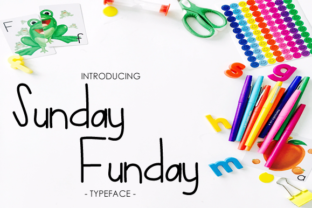
Sunday Funday is a handwritten-style font that exudes a sense of ease and approachability. Its irregular strokes and organic shape give it a distinctive, personal feel. Unlike more rigid or structured fonts, Sunday Funday feels like it was created with a carefree mindset, making it perfect for lighthearted designs such as invitations, social media graphics, or branding for creative businesses.
This font is often used to convey a sense of fun and informality. It can add character to designs that might otherwise feel too serious or corporate. However, its casual nature also means it may not be appropriate for all contexts, particularly those requiring a professional or formal appearance.
Why Consider Sunday Funday?
Designers might choose Sunday Funday for several reasons. First, its unique visual style can help a design stand out in a crowded space. In an era where many digital assets use standard typefaces, a custom or unconventional font like Sunday Funday can create a memorable impression.
Another reason to consider this font is its versatility in certain design applications. For example, it works well in headlines, logos, or short phrases where a friendly, approachable look is desired. It can also be paired with more traditional fonts to create contrast and balance in a layout.
Additionally, Sunday Funday may appeal to designers who want to express creativity without overcomplicating their work. Its simplicity in form allows for quick implementation while still delivering a distinctive visual identity.
Benefits and Tradeoffs
One of the main benefits of using Sunday Funday is its ability to add personality to a design. It can evoke a sense of warmth and familiarity, which is especially valuable in branding for small businesses, creative startups, or personal projects.
However, there are tradeoffs to consider. The font’s informal style may not be suitable for all audiences or industries. In professional settings, such as legal documents, financial reports, or academic publications, a more conventional typeface would likely be preferred.
Another potential drawback is readability. While Sunday Funday is legible in short text blocks, it may become difficult to read in longer paragraphs. This limits its effectiveness as a body font in most cases, though it can still serve as a strong headline or title font.
Situations Where Sunday Funday Excels
Sunday Funday is a strong fit for designs that aim to communicate a relaxed or fun atmosphere. For instance, it could be used in marketing materials for events, parties, or entertainment-related brands. It also works well for personal websites, blogs, or social media profiles that want to project a casual, approachable image.
Additionally, the font is ideal for creative projects where originality is a priority. Artists, illustrators, and independent designers may find that Sunday Funday helps them establish a unique visual identity that reflects their personal style.
It can also be useful in educational or children’s content, where a friendly and engaging font can enhance the overall experience. In these cases, the informal nature of Sunday Funday can make the content feel more accessible and inviting.
When Alternatives May Be Better
In situations where professionalism or clarity is essential, alternatives to Sunday Funday may be more appropriate. For example, serif fonts like Georgia or Times New Roman are often used in print media for their readability and traditional appearance. Sans-serif fonts like Arial or Helvetica are popular choices for digital interfaces due to their clean, modern look.
Designers should also consider the target audience when selecting a font. If the audience expects a high level of formality or sophistication, a more restrained typeface may be better suited to the project. Similarly, if the design requires a large amount of text, a font that prioritizes legibility over style will likely be more effective.
For projects that require a balance between creativity and functionality, a hybrid approach may be beneficial. Combining Sunday Funday with a more traditional font can provide both visual interest and practicality, allowing designers to maintain a cohesive look while meeting the needs of the audience.
Decision-Making Insights
When evaluating whether to use Sunday Funday, designers should start by defining the purpose of the project. What message do they want to convey? Who is the intended audience? How does the font align with the overall design goals?
Testing the font in different contexts can also be helpful. Experimenting with how it looks in headlines, body text, and various sizes can reveal strengths and limitations. This process can help determine whether the font is a good fit for the specific application.
Finally, considering the broader design ecosystem is important. How does Sunday Funday interact with other elements of the design, such as color, imagery, and layout? Ensuring that the font complements rather than conflicts with other design choices will lead to a more effective outcome.
Ultimately, the decision to use Sunday Funday should be based on a thoughtful evaluation of its strengths, limitations, and suitability for the intended purpose. By carefully considering these factors, designers can make informed choices that support their creative goals and meet the needs of their audience.