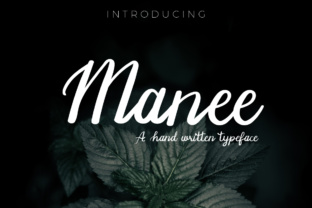
Manee: A Handwritten Typeface for Creative Designs
Manee is a stylish and well-crafted handwritten typeface that offers a clean, optimistic aesthetic. Designed for versatility, it can enhance a wide range of visual projects, particularly those seeking a modern, fashionable tone. Its unique character makes it an appealing choice for designers looking to add a personal touch to their work.
What Is Manee?
Manee is a handwritten font that combines elegance with readability. It features fluid lines and subtle variations in stroke weight, giving it a natural, hand-drawn feel. This typeface is ideal for projects that require a balance between creativity and clarity. Its design allows it to stand out while maintaining legibility, making it suitable for both digital and print applications.
Why Consider Manee?
Designers often turn to Manee when they want to infuse their work with a sense of warmth and authenticity. The font’s organic style can complement modern layouts, adding a human element to otherwise rigid designs. It is especially popular in branding, editorial design, and marketing materials where a personal or artisanal touch is desired.
One of the key reasons to consider Manee is its compatibility with other typefaces. Its clean structure allows it to pair well with a variety of contrasting fonts, making it a flexible option for multi-font compositions. Whether used as a headline or a body text, Manee can adapt to different design contexts without losing its distinct character.
Benefits of Using Manee
Manee offers several advantages for designers. Its readability at smaller sizes makes it suitable for use in captions, labels, and other short-form text. The font’s consistent spacing and balanced proportions ensure that it remains visually pleasing even when used in large blocks of text.
Another benefit is its ability to convey a positive and approachable mood. The soft curves and gentle strokes of Manee create a friendly impression, which can be beneficial for brands aiming to connect with their audience on an emotional level. This makes it a strong choice for businesses in the lifestyle, fashion, or wellness industries.
Tradeoffs and Considerations
While Manee is versatile, it may not be the best fit for every project. Its handwritten style can sometimes appear too casual for formal or professional settings. In such cases, a more structured typeface might be more appropriate. Designers should also consider the context in which the font will be used, as overly decorative elements can distract from the message being conveyed.
Additionally, the font’s unique characteristics may require careful attention to spacing and alignment. When used in complex layouts, adjustments may be necessary to ensure consistency and visual harmony. It is important to test the font in different sizes and formats before finalizing a design.
Situations Where Manee Excels
Manee is particularly effective in projects that emphasize creativity and individuality. It works well in social media graphics, blog headers, and promotional banners where a fresh, contemporary look is desired. Its ability to blend with other fonts makes it a valuable addition to any designer’s toolkit.
In editorial design, Manee can be used to highlight key sections of a publication, adding visual interest without overwhelming the reader. It is also useful in packaging design, where a handwritten element can make a product stand out on the shelf.
When Alternatives May Be Better
For projects requiring a more formal or technical tone, alternatives to Manee may be more suitable. Serif fonts like Georgia or Times New Roman offer a traditional, authoritative look, while sans-serif fonts like Helvetica or Arial provide a clean, modern appearance. These options may be preferable in corporate or academic environments.
Designers working on high-volume print projects may also find that Manee’s intricacies could affect readability. In such cases, a simpler typeface might be more practical. It is always wise to evaluate the specific needs of a project before selecting a font.
Practical Decision-Making Insights
When deciding whether to use Manee, consider the purpose of the design and the target audience. If the goal is to create a warm, inviting atmosphere, Manee can be an excellent choice. However, if the focus is on clarity and professionalism, other fonts may be more appropriate.
It is also helpful to experiment with different combinations. Testing Manee alongside other typefaces can reveal how it performs in various contexts. This process can help designers determine whether the font aligns with their creative vision and functional requirements.
Finally, staying informed about current design trends can provide insight into the effectiveness of Manee in different scenarios. While it remains a popular choice, understanding its strengths and limitations can guide more informed decisions.