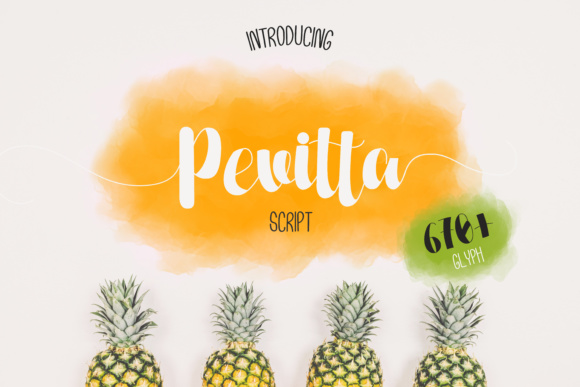
Pevitta: A Handwritten Typeface with Sass and Style
Pevitta is a distinctive handwritten typeface that stands out for its bold, expressive character. With its swirling lines and playful flair, it brings a sense of personality and charm to any design project. This font is ideal for those looking to add a unique touch to their visual work, whether in print or digital formats.
What Makes Pevitta Unique?
Pevitta distinguishes itself through its handcrafted aesthetic, which gives it an organic feel compared to more rigid, geometric fonts. The font features a variety of ligatures and alternate characters, allowing for greater customization and creativity. Its dynamic strokes and fluid curves make it particularly well-suited for projects that require a personal, artistic touch.
Unlike many other handwritten fonts that may lack consistency or clarity, Pevitta maintains readability while still offering a strong visual identity. This balance makes it versatile for both large-scale typography and smaller text elements.
Comparing Pevitta to Similar Options
When considering alternatives to Pevitta, designers often look at other handwritten typefaces such as Brush Script, Lobster, or Pacifico. While these fonts also offer a hand-drawn appearance, they tend to be more uniform in style. Pevitta, by contrast, provides a more varied and expressive look, making it a better fit for projects that benefit from a distinct, individualized aesthetic.
Some fonts prioritize simplicity and legibility, while others focus on ornate details. Pevitta sits somewhere in the middle, offering enough complexity to stand out without becoming overwhelming. This makes it a good choice for logos, headlines, and branding materials where a strong visual presence is important.
Strengths and Best-Fit Situations
The primary strength of Pevitta lies in its ability to convey emotion and character. Its swirling, flowing design can evoke a sense of warmth, playfulness, or elegance, depending on how it's used. This makes it especially effective in creative industries such as fashion, art, and marketing, where visual storytelling is key.
For instance, a boutique clothing brand might use Pevitta for its logo to communicate a sense of artisanal quality and individuality. Similarly, a wedding invitation could benefit from the font’s romantic, handcrafted feel, adding a personal touch to the design.
Tradeoffs and Limitations
While Pevitta offers a unique visual appeal, it may not be the best choice for every project. Its stylized nature can sometimes make it less suitable for body text, where clarity and consistency are more important. In such cases, a more traditional sans-serif or serif font might be more appropriate.
Additionally, the font’s intricate details may not render as effectively in certain digital environments, particularly at smaller sizes or on low-resolution screens. Designers should test Pevitta in different contexts to ensure it meets their specific needs.
When to Choose Pevitta
Pevitta is an excellent option when the goal is to create a memorable, visually striking design. It works well for projects that require a personal, artistic touch, such as branding, editorial layouts, or social media graphics. Its versatility allows it to adapt to a range of styles, from casual to sophisticated.
If the design requires a strong focal point, Pevitta can serve as the centerpiece, drawing attention and setting the tone. For example, a music festival poster might use Pevitta for the event name to capture the energy and excitement of the occasion.
When to Consider Alternatives
There are scenarios where another font might be more suitable. If the design needs to maintain a professional or minimalist look, a cleaner typeface could be a better fit. Similarly, if the project involves a lot of text, a more readable font may be necessary to ensure accessibility and usability.
Designers should also consider the target audience. A highly stylized font like Pevitta may not resonate with all viewers, especially in more formal or business-oriented contexts. In such cases, a more conventional typeface might be preferable.
Practical Examples and Use Cases
One practical application of Pevitta is in the creation of custom illustrations or signage. Its fluid, handwritten style can enhance the overall aesthetic of a design, making it ideal for storefronts, event banners, or promotional materials. For example, a café might use Pevitta for its menu headings to create a cozy, inviting atmosphere.
Another use case is in digital content, such as blog headers or social media posts. Pevitta can add a unique, eye-catching element to online content, helping to differentiate a brand or message. However, it’s important to pair it with complementary fonts to maintain visual balance and readability.
Conclusion
Pevitta is a powerful tool for designers seeking to add personality and flair to their work. Its combination of style and readability makes it a valuable asset in various design contexts. However, like any typeface, it has its strengths and limitations, and its suitability depends on the specific needs of the project.
By understanding the characteristics of Pevitta and how it compares to other options, designers can make informed decisions about when and how to use it effectively. Whether as a centerpiece or a supporting element, Pevitta offers a distinctive way to express creativity and style.